

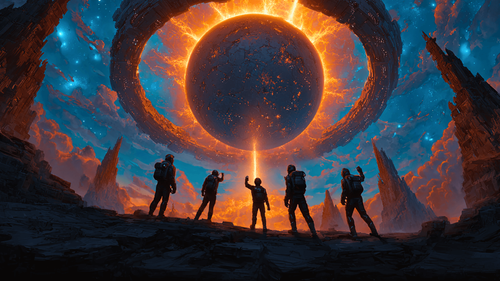
What might the future of gaming look like? We can speculate endlessly about technological advancements, but a better approach might be to ponder what gamers actually want right now.
The latest global gamer survey from consulting firm Bain & Company revealed that modern players value social elements as much as gameplay, and even more than high-fidelity graphics. With UGC-focused games having become mainstream, players now devote more time than ever to creating their own stuff: in the last 12 months, four-fifths enjoyed a game featuring player-made levels, modes, or items.
The report also noted the growth of platform-style games like Minecraft, Fortnite and Roblox, all of which are at the center of the UGC trend. The ability to personalize virtual experiences and bond with friends is a major motivation for players of these titles, leaving the developer free to refine tools and sharpen game mechanics.
Perhaps the most revealing line in the report was that “Today’s users don’t just want to play; they want a hand in shaping the experience.” There’s no reason to assume tomorrow’s users will be any different. Which bodes well for the future of Alien Worlds, which is best categorized as a blockchain-powered, platform-style game with community at its core.
A Window into the Future
Standalone games were once the only show in town, but games-as-a-platform operate on a bigger scale, representing continuously evolving universes. That isn’t to say the days of standalone games are numbered; they just have a tougher job competing with platforms offering user-generated content and, in the case of Alien Worlds, decentralized governance and token rewards.
It stands to reason that games of the future will have better graphics and more immersive gameplay. Perhaps VR headsets, glasses, or contact lenses will become the standard interface for virtual worlds. But technology aside, the future of gaming needs to deliver on players’ expectations. Beyond creating a compelling world/narrative, developers must invest in social and creative elements and, per the survey, empower players to shape the experience.
Alien Worlds already delivers in this regard: not only is its central mining game and various spinoffs anchored by the rich foundational lore penned by award-winning sci-fi author Kevin J. Anderson, but players can participate in weekly elections to determine who gets to call the shots in the Planetary Syndicates. They can also use their Alien World NFTs across a raft of interconnected games (Mercenary Battlegrounds, Meta Battler, Milky Way Miner, Battlefleet Armageddon), expand the lore by submitting their own stories, seek support from Galactic Hubs to build new mini-games, compete in tournaments to earn rewards, and socialize with fellow players in dedicated planetary Discords.
Now imagine all of the above – a platform-style game with decentralized governance, provable ownership through NFTs, and strong social dynamics – combined with futuristic gaming technology. This approximates what gaming might conceivably look like in 10 or 20 years’ time.
Modes of Ownership and Exchange
It might be overstating the case to claim that all in-game assets will eventually be tokenized, but it’s hard to envision a future in which NFTs don’t feature. Like it or not, non-fungible tokens provide a means by which developers can reward skill and confer a kind of ‘social status’ upon the best players. Even web2 gaming giants like Sony have sought patents to make NFTs transferable between their games and consoles.
While NFTs representing skins, armour, weapons and other in-game commodities can be highly valuable, they are just part of the puzzle. Many players want a say in other matters, like game design and reward structures. If NFTs and blockchain are central to value exchange, then DAOs are the default means by which the voice of the community can be heard.
Alien Worlds is the perfect proving ground for this thesis: over 4,500 proposals submitted to the Syndicates in the last three years, some summarily rejected, others heartily endorsed. Any player can run for Custodianship on Veles, Kavian, Eyeke, Magor, Neri, or Naron, whereupon they can advance their own vision for the game’s future. As more traditional users learn that it’s possible to influence games in this way, the audience of DAO-driven, platform-style games like Alien Worlds will increase.
Although predicting what gaming will look like in the future isn’t an exact science, it seems a relatively safe bet to imagine power shifting from developers to communities. Player-run economies, provable ownership, and peer-to-peer trading also seem likely, with greater interoperability enabling players to port their earned loot from one game (or platform) to another. In many respects, Alien Worlds is well ahead of the curve and showing recalcitrant developers where the hands have come on the clock.
From this vantage, the future looks bright.